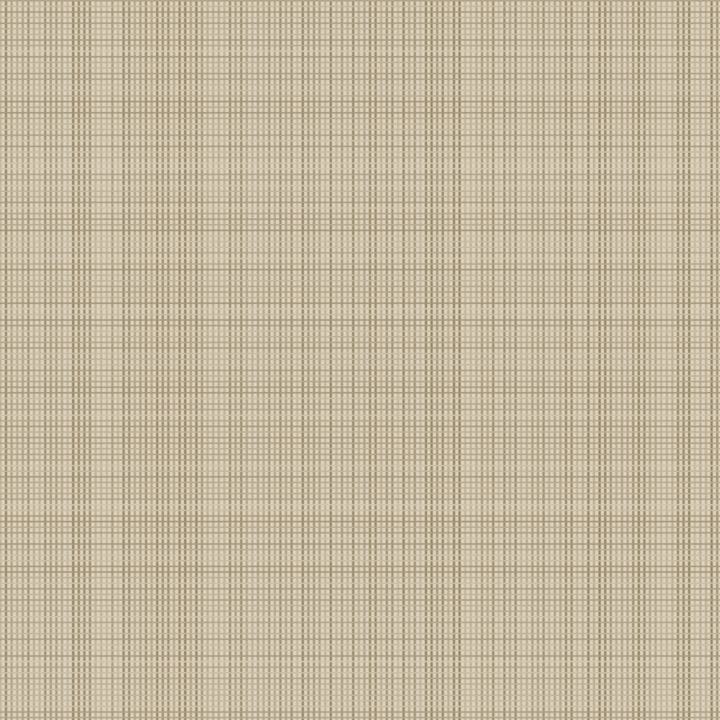
Linen Weave
Linen is spun from the fibres of the flax plant, which are long, smooth and comparatively inelastic. That last property explains almost everything about how the cloth behaves: it creases sharply, hangs heavily, and softens with washing rather than with wear. The characteristic slubs are thicker sections of fibre left in the yarn, and they are a feature of the material rather than a fault in it.
Undyed linen ranges from a pale oatmeal to a grey-brown, depending on how the flax was retted and how much of the natural colour has been bleached out. Full bleaching produces a white but costs the cloth some of its handle, which is why the best plain linens for interiors are usually only partly bleached.
In a room linen does most of its work through light. The uneven surface scatters light in a way that flat-woven cotton does not, so a linen curtain reads as a soft field of tone rather than as a plane of colour, and a linen cover keeps its shape visible even in an unlit corner.
The creasing is not a problem to be solved. A linen loose cover that has been sat on looks correct; the same cover pressed flat looks like something else entirely, and no amount of finishing will make linen behave like a synthetic.